Cross Timbers Connection focuses on four North Texas ecoregions. Our central focus is the Cross Timbers, along with portions of the Rolling Plains to the west and the Blackland Prairies and the Post Oak Savannah to the east. The natural world does not recognize political boundaries and neither do we, and so we are interested in these ecoregions as they extend into Oklahoma and beyond.
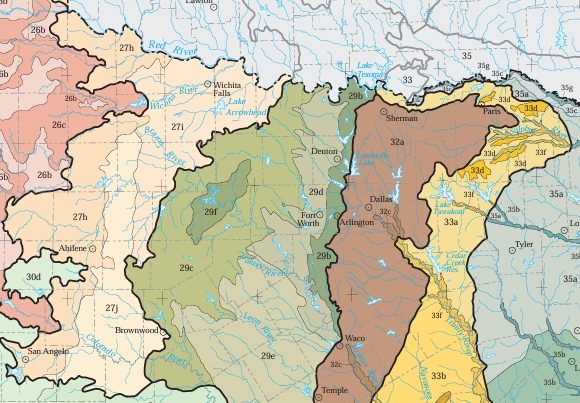
Getting to know something about these ecoregions is like getting to know the neighborhood where you live. You spend time there, so why not unfold the map to get your bearings and roll down the windows and have a look.
The Environmental Protection Agency website states that “Ecoregions are areas where ecosystems (and the type, quality, and quantity of environmental resources) are generally similar[i].” An ecoregion such as the Cross Timbers has, to some extent, its own distinctive climate, geography, soils, and living things. But if you zoom out for a broader look, some of those things are shared with surrounding areas, and so there are different levels of ecoregions, designated by Roman numerals I-IV. Level I is the broadest, while Level IV zooms in for the most detail. The map fragment above shows Level IV ecoregions.
The Cross Timbers are oak woodlands and prairies adapted to relatively low rainfall. The ecoregion extends beyond Texas. It runs north through Oklahoma into southern Kansas and a little of Arkansas, as you can see in a map provided online by the Ancient Cross Timbers Consortium.[ii]
If you imagine traveling across Texas before European settlers arrived, going from west to east, you would start in higher, more arid grasslands in places like Abilene. As you moved further east you would begin encountering oak woodlands and prairies with gradually more rainfall. Then, starting around Dallas, you would go through an area with tallgrass prairies and then a region with scattered oaks and grasslands, before arriving at the lower, wetter Piney Woods.
These regions of North Texas depend on the soil and rock below as well as the rain and sun above, so let’s start with those things. If we looked underneath the soil surface, we would see layers of rock gently tilted so that older rock is exposed further to the west of Fort Worth while the younger rock reaches the surface east of Dallas. These layers were deposited by inland seas, rivers, and floodplains, from 300 million years ago in the west to about 50 million years ago in the east.
Sandstone, clay, and similar materials alternate with limestone across north Texas. Areas with limestone and clay gave rise to black soil in the Blackland Prairies east of the Cross Timbers and in the Grand Prairie that is part of the interior of the Cross Timbers. Such soil supports the grasslands found there. In contrast, the two north-south bands of oaks – the Eastern and Western Cross Timbers – grow in more sandy soil (especially in the east) that comes from sandstone. Rainfall is absorbed and held in sandstone and tree roots can penetrate into it for moisture during drought.
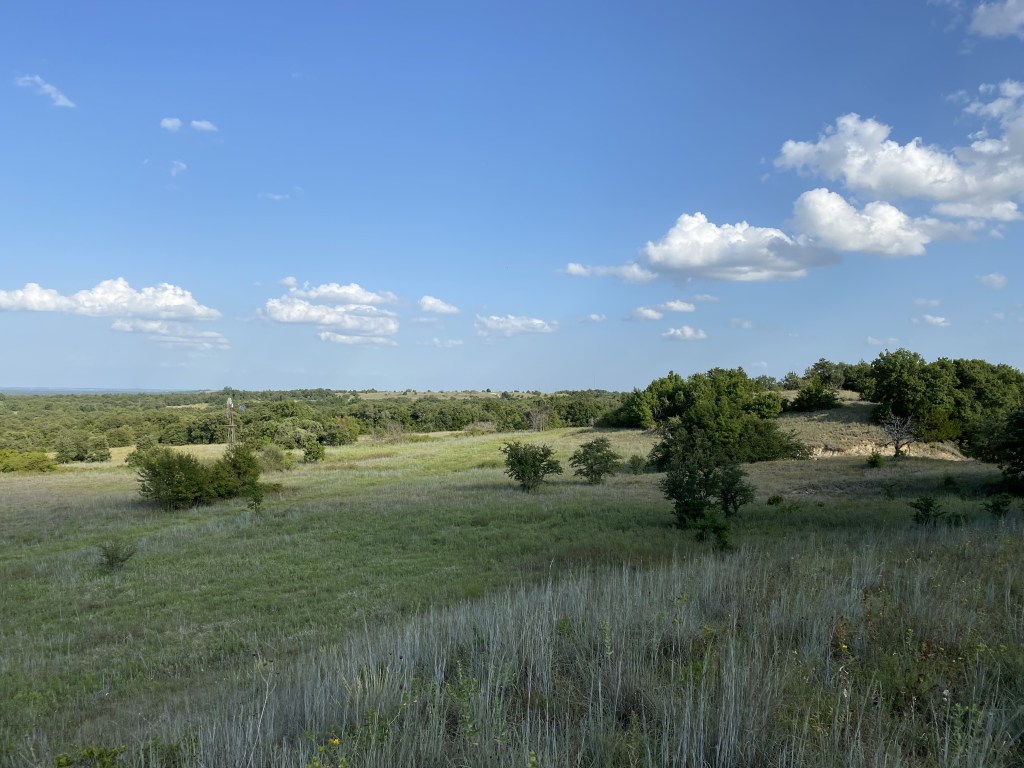
Rainfall shapes the plant communities, which in turn shape the kinds of wildlife that live within those communities. In The Cast Iron Forest,[iii] Francaviglia reports that annual rainfall is around 40 inches in the east of our region, diminishing to about 25 inches as we go westward. Our climate is changing and weather can be erratic, but it is still true that it is wetter in the east and more arid in the west. And so, the prairies of the Blackland region may stand tall and lush, while in the west, grasses are shorter and often a little more sparse. Even the trees are a little shorter in the Western Cross Timbers.
Within the Cross Timbers ecoregion, two bands of woodlands extend north and south, framing the Grand Prairie and the Limestone Cut Plain between them. The signature trees of the woods are post oak and blackjack oak. Other species like juniper or hackberry are scattered in places, and low areas near water showcase cottonwoods, ash, and other kinds of trees. However, especially in upland areas, the post oaks and blackjacks dominate.
Both species of oaks are adapted for lower rainfall and so they are fairly drought tolerant. They don’t grow very tall, often reaching no more than 30 feet. Post oaks often have gnarled and twisted branches. The post oak has deeply notched leaves with blunt lobes. Blackjack oak leaves are not deeply notched and often have three lobes, each ending with a small spine or bristle extending from the vein of the leaf.
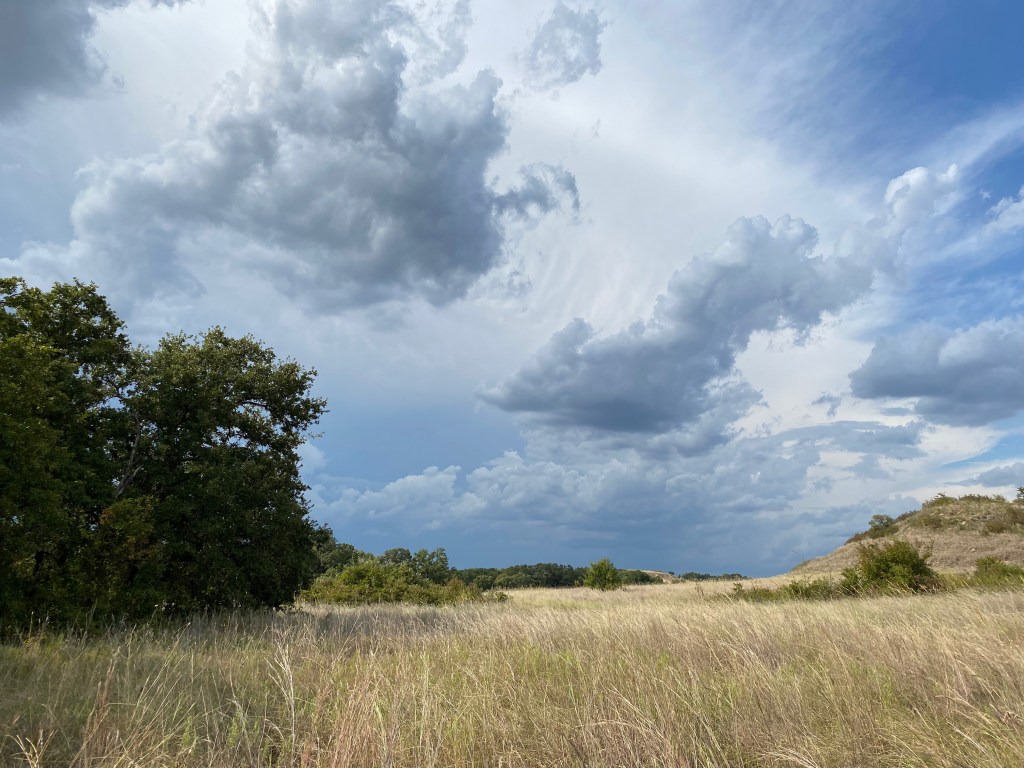
The Eastern and Western Cross Timbers are not continuous oak woodlands. They are a mosaic of woodlands and small prairie openings where little bluestem and other prairie grasses grow along with wildflowers and other forbs such as western ragweed and croton. Along woodland edges, vines such as greenbrier are common.
The Cross Timbers supports populations of nine-banded armadillos, bobcats, coyotes, white-tailed deer, raccoons, and other mammals. Prairie openings are good habitat for the hispid cotton rat and other rodents. The rodents help provide a prey base not only for such predators as coyotes and owls but also for rat snakes, bullsnakes, and particularly in prairies, the western diamond-backed rattlesnake. On a drive down a ranch road, you might see a roadrunner flash its crest of feathers and run off the road, disappearing into a fence row. You might also see the aerial dance of a scissor-tailed flycatcher as it catches a flying insect.
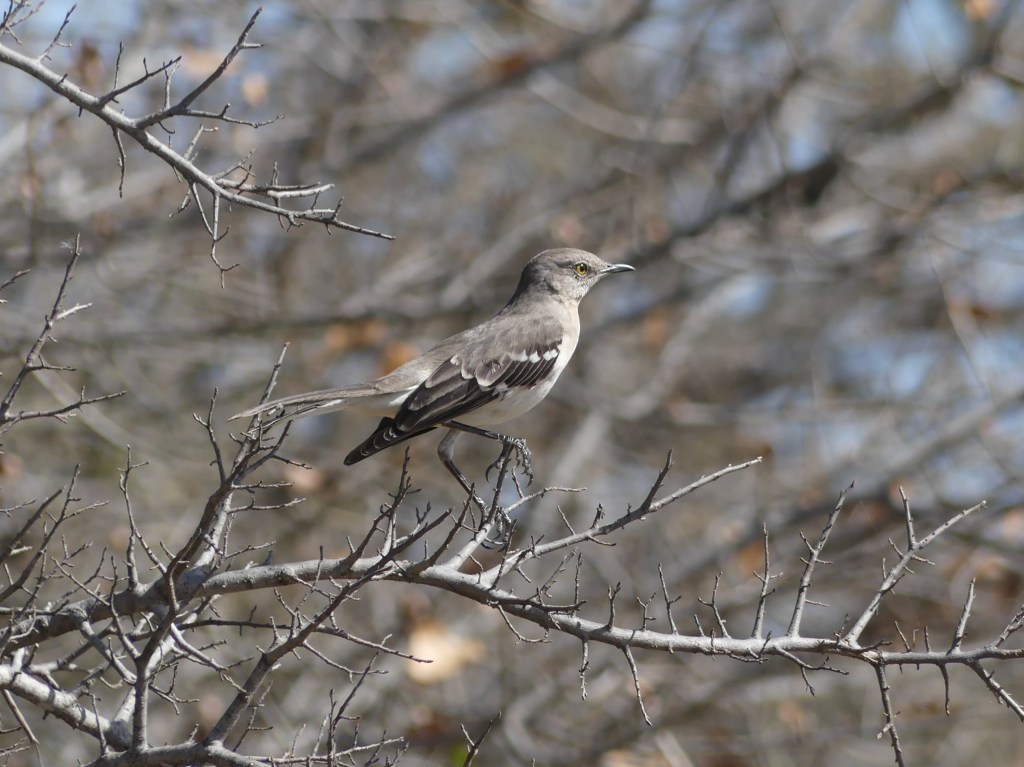
Late in the year, you might see a male Texas brown tarantula wandering the landscape looking for a female. They are our largest spiders, but they’re no threat to us if we let them wander. Copperheads are common in some places within the Cross Timbers, and Texas spiny lizards hang out (literally) on the trunks of oaks while hunting insects. Days in the Cross Timbers are brightened with the songs of northern cardinals, chickadees, wrens and many other birds. On spring nights near ponds, the calls of gray treefrogs, cricket frogs, and other species can be heard. In the prairies, around ephemeral pools and ponds, chorus frogs call.
In Prairie Time,[iv] Matt White described the original Blackland Prairie as “…a complex patchwork of woods, brushy vegetation, and open grasslands” (p. 5). Trees grew along the corridors of creeks, with prairie often growing where the land was a little higher. The prairie is a diverse community of grasses and forbs (herbaceous, broad-leaved plants). It is full of all kinds of life, including small wildflowers, tall grasses, shorter grasses, vines, ground-nesting birds, mammals, reptiles and amphibians (some of whom spend time in burrows along with some crayfish species), and a huge assortment of insects with spiders waiting to ambush or catch them. Such an ecosystem may grow close to the ground, but it is still complex and diverse.
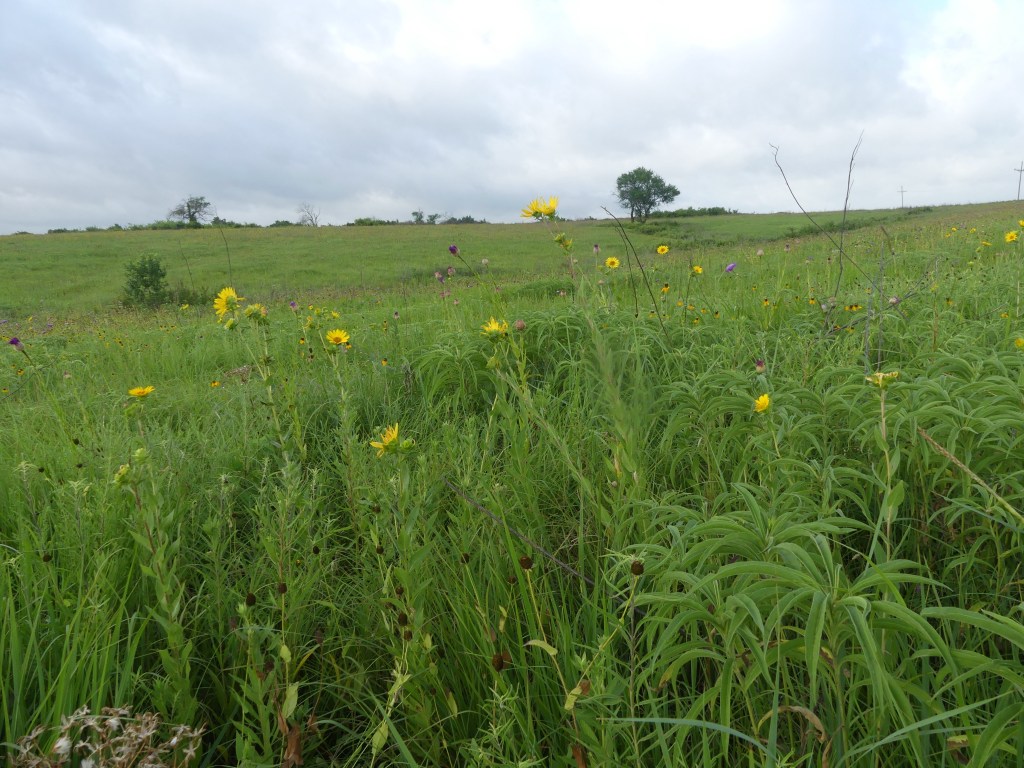
The Blackland grows on that rich, black soil, and settlers soon discovered how fertile it was. The land was plowed for farms and cleared for roads and cities, so that today less than one-tenth of one percent of the original Blackland Prairie remains. Many of those remnants are maintained by conservation-minded farmers, the Native Prairies Association of Texas, and the Nature Conservancy.
The land west of the Cross Timbers is more arid. On a drive from Fort Worth to Wichita Falls, we would start in the Western Cross Timbers, pass the LBJ National Grasslands around Decatur, and then the woodlands would become sparse after Bowie. Before you reach Wichita Falls, you are driving across relatively flat ranchland with mesquite, prickly pear, and grasses growing in reddish soil. You have entered the Rolling Plains ecoregion.
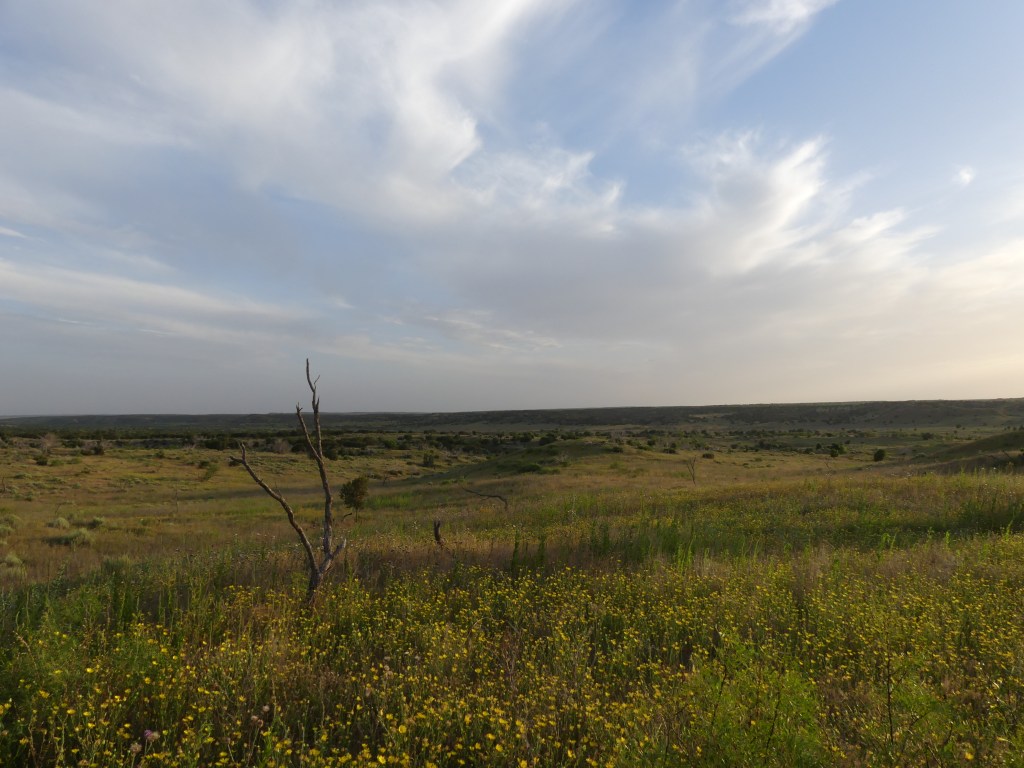
They are the most southern extent of the Great Plains, originally dominated by mid- to short-grass prairie with hackberry, juniper, and cottonwood trees following the creeks and rivers. In the east, the region is flatter but by the time you reach the western edge of the ecoregion, the land is cut into canyons and tablelands that expose layers of red soil, pale mudstone, and sandstone, under a caliche caprock.[v]
In many places, the original grasses like little bluestem and sideoats grama have been replaced with grasses designed for maximum productivity as cattle forage. Plowing and overgrazing have taken their toll and made the land more vulnerable to periodic drought, and in many places honey mesquite and prickly pear have crowded out some of the native plants.
[i] Ecoregions. U.S. Environmental Protection Agency. https://www.epa.gov/eco-research/ecoregions (accessed 7/26/26)
[ii] Ancient Cross Timbers Consortium. (https://xtimbers.uark.edu/map/, accessed 8/28/25)
[iii] Francavglia, R.V. 2000. The Cast Iron Forest: A Natural and Cultural History of the North American Cross Timbers. Austin: University of Texas Press
[iv] White, M. 2006. Prairie Time: A Blackland Portrait. College Station: Texas A&M University Press
[v] Chapman, B.R. & E.G. Bolen. 2018. The Natural History of Texas. College Station: Texas A&M University Press

